29 February 2024
What already exists
With STEV-E, we want to change urban mobility, but we are not alone. In this article we review a few promising projects.
I started sketching as soon as the idea came. But I did not want to (completely) reinvent the wheel, so I looked at what already existed.
My goal: find means of road transport that are
- small and handy (1 or 2 seats),
- protected from the outside,
- environmentally friendly.
The variety of vehicles and projects was impressive. Here is a selection, classified.
The photos below come from Wikimedia Commons and are reused under free licences, with credit (author + licence). See all credits at the bottom.
Bigger, closer to a motorbike than a bike
Renault Twizy
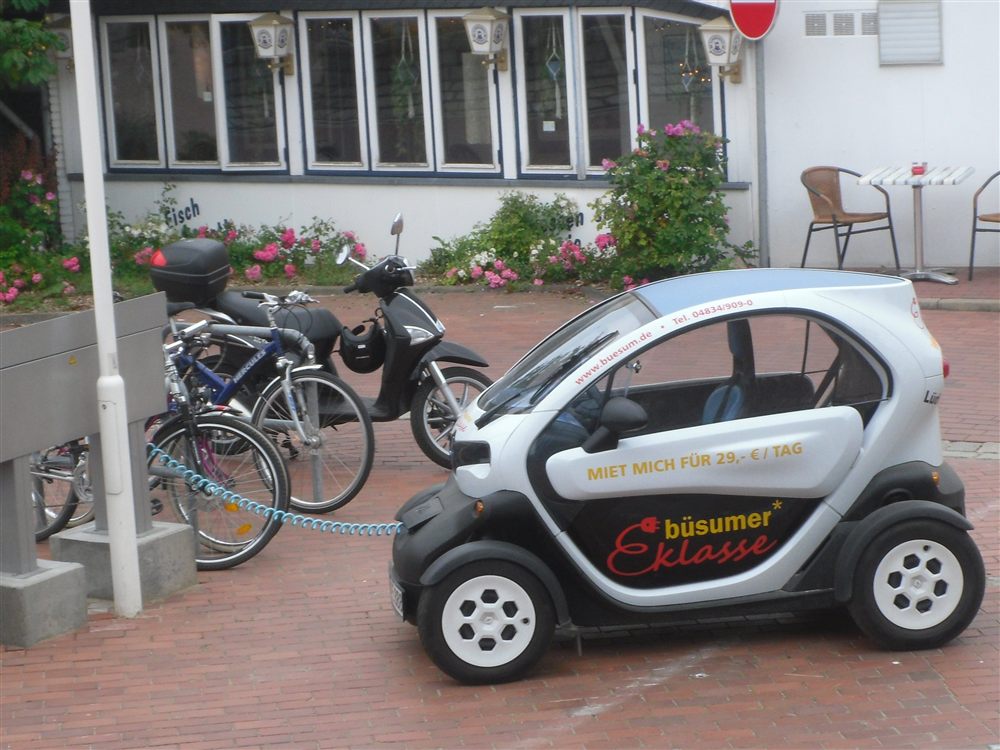
Renault Twizy — photo: Elmschrat, CC BY-SA 3.0, via Wikimedia Commons.

To my knowledge, the only car/motorbike hybrid to have been marketed, and it was widely talked about, for better and for worse. Price: €10,000 new.
BMW Clevver
Supported by BMW and funded by the European Union, Clevver aimed at a low-carbon vehicle suited to the city: natural-gas engine, controlled tilting, up to 100 km/h for 2 passengers. After several running prototypes, the project was stopped and relegated to the BMW museum in Munich.
No freely reusable image available.
Lumeneo SMERA
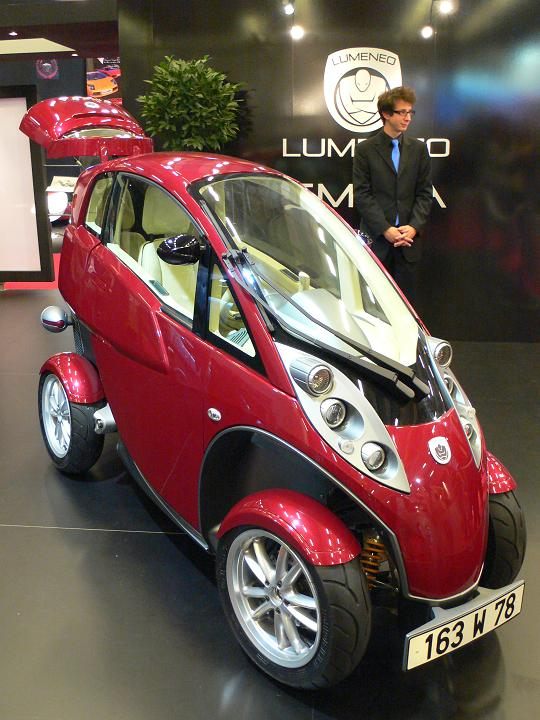
Lumeneo SMERA — photo: Ascaron, CC BY-SA 3.0, via Wikimedia Commons.

A French startup founded in 2006, Lumeneo wanted to revolutionise the car with a fully electric two-seater four-wheeler. Lacking interest, the company went bankrupt in 2013. Price: €25,000 new.
Monotracers
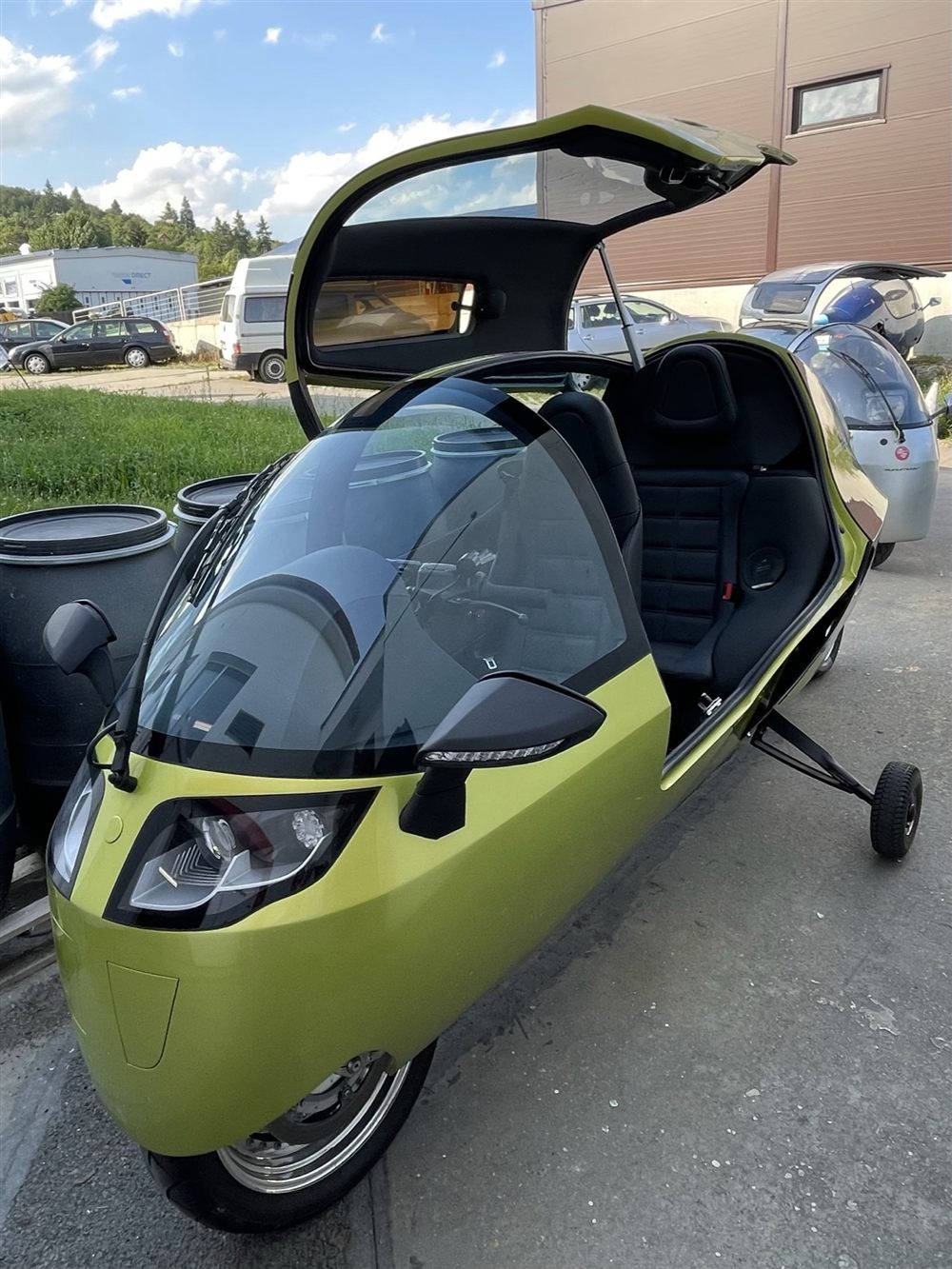
Peraves MonoRacer — photo: T660, CC0 (public domain), via Wikimedia Commons.

Fully faired motorcycles with small wheels and stabiliser wheels that extend at low speed. In 2011, the Peraves Monotracer was the fastest production electric vehicle in the world at 250 km/h. Price: €80,000.
CIXI Vigoz
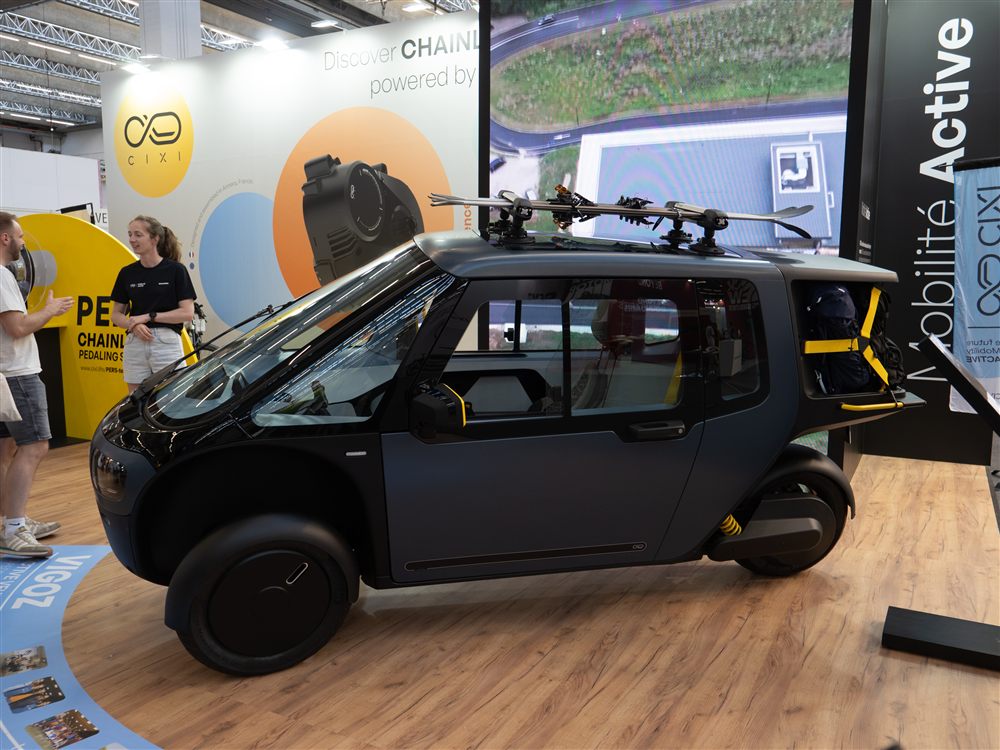
CIXI Vigoz (Eurobike 2025) — photo: Matti Blume, CC BY-SA 4.0, via Wikimedia Commons.
.jpg)
Unlike most of the projects above, this one is not finished: the French startup CIXI has been working since 2016 on a vehicle propelled by pedalling and electrically assisted, up to 120 km/h. It would be offered for rent rather than for purchase.
AKO trike P150
A Lithuanian project also launched in 2016, targeting the gap between car and motorbike. Up to 230 km/h, fully electric, safer than a motorbike. After several prototypes, a final version was planned.
No freely reusable image available.
Closer to a bike and a velomobile
Bio-hybrid
Developed in Germany, it was to be industrialised in 2023, the year the company declared bankruptcy. It exists in a cargo version and a two-seater version, with a windscreen and roof. Price: €9,500.
No freely reusable image available.
Podbike Frikar
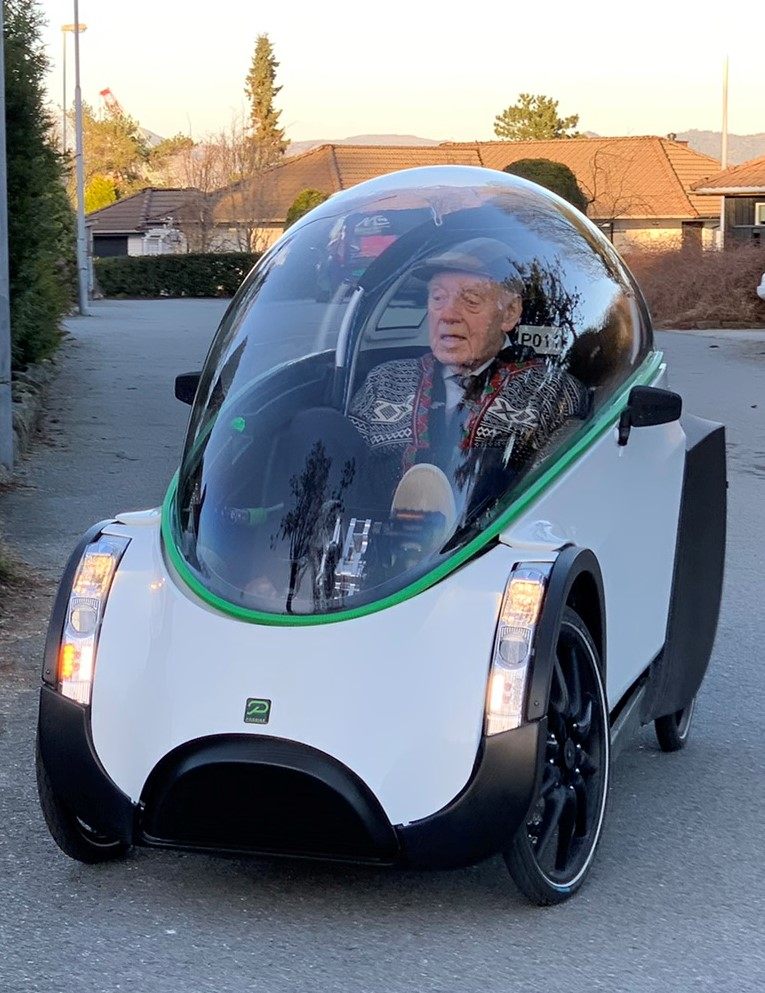
Podbike Frikar — photo: Pleksikon, CC BY-SA 4.0, via Wikimedia Commons.

In development in Norway, it aims to modernise the velomobile by reducing costs through a more manufacturable design. The website announced more than 4,600 pre-orders. Price: €6,250.
Sinclair IRIS
A futuristic concept that is in fact a (very beautiful) evolution of the classic velomobile: underneath the bodywork, the base is a traditional trike. Its inventor planned many ergonomic and everyday features (GPS, filtered air, indicators…). Price: €7,000.
No freely reusable image available.
Conclusion
This benchmark is far from exhaustive, but it shows that the STEV-E concept is not alone. Many have tried to revolutionise urban mobility. We hope some of these projects succeed, for a safer and more sustainable world.
Full photo credits: see the project’s credits.md file.